How the BeeCurious Curriculum at BrightPath Uses Sound and Motion to Deepen Learning.
Music and movement are among the earliest forms of expression in childhood. Long before children can fully articulate their ideas with words, they clap, sway, tap, bounce, and hum. These natural responses to rhythm and sound are more than playful moments, they are powerful pathways for learning.
Within the BeeCurious Curriculum at BrightPath, music and movement are intentionally woven into daily experiences. From tapping rhythms on a drum to participating in group dances, children explore sound and motion in ways that support memory, coordination, communication, and emotional expression. Music is integrated throughout the day as a tool for curiosity and connection.
Music as a Daily Experience
Music is embedded into many parts of the daily routine. It is used during transitions, gathering circles, rest time, yoga sessions, WeeMove, and other physical literacy activities. Songs often signal changes in the day, helping children move from one activity to another with familiarity and confidence.
During quieter moments, calming music may support regulation and relaxation. During active play, upbeat rhythms encourage large-body movement and coordination. The consistent presence of music throughout the day provides structure while also creating space for spontaneity and joy.
Exploring Sound Through Instruments and Everyday Materials
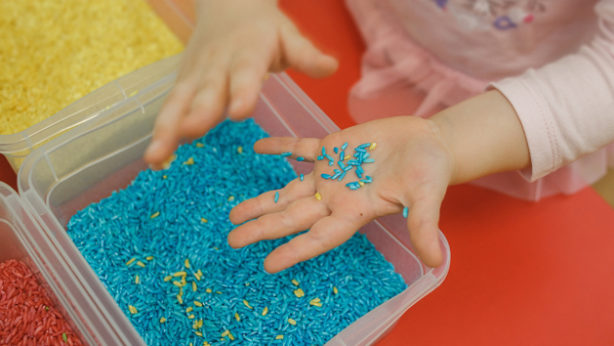
Children are introduced to a wide variety of instruments and sound-making tools. Classrooms may include shakers, drums, rhythm blocks, and other percussion instruments. However, exploration is not limited to traditional tools. In many cases, any material that produces sound becomes an instrument, like a container tapped against a surface, blocks struck together, or loose materials shaken inside a jar.
This open-ended approach invites experimentation. Children learn that sound can be created in many ways and that their bodies are instruments as well. Clapping, stomping, snapping, and vocalizing all become part of the exploration.
Through these experiences, children develop coordination, timing, and awareness of how their movements affect sound.
Music, Memory, and Learning
Music supports memory and learning through rhythm, repetition, and melody. When information is paired with a song, children often retain it more easily. Songs help reinforce routines and concepts such as counting, letter recognition, and daily sequences.
Repetition within music strengthens recall. A familiar melody allows children to anticipate words and patterns, supporting language development and confidence. Actions paired with lyrics further strengthen understanding. When children move their bodies while singing, they engage multiple senses at once, reinforcing both memory and comprehension.
Music also introduces new vocabulary and varied speech patterns. Through songs, children encounter different rhythms of language, expressive tones, and phrasing that expand their communication skills.
Children as Creators of Rhythm and Song
In BeeCurious classrooms, children are not only participants, they are creators. They experiment with sounds, noises, clapping patterns, and language to invent their own rhythms. Familiar songs often become starting points for innovation, with children changing the words, adding new sounds, or altering the tempo.
This experimentation supports creative thinking and expressive language. When children build new lyrics or rhythms, they are organizing ideas, testing patterns, and listening carefully to how sounds connect. These moments demonstrate curiosity in action, as children explore the relationship between sound and meaning.
Movement as Expression
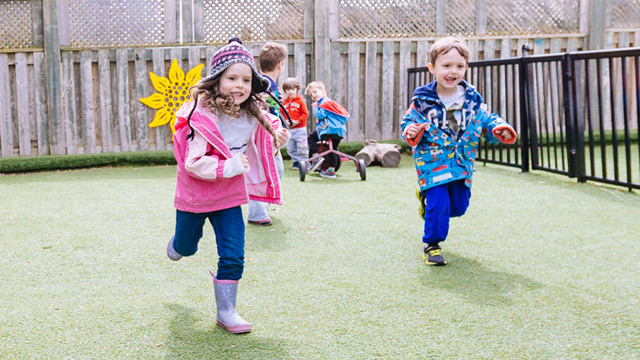
Dance and movement are natural extensions of music. Some songs include guided actions that children can copy, supporting coordination and listening skills. At other times, movement is open-ended. Children may choose how their bodies respond, spinning, swaying, jumping, or simply rocking gently.
Importantly, participation looks different for each child. Some sing loudly and confidently. Others move quietly or observe before joining in. The BeeCurious approach honors these individual differences, recognizing that expression does not need to look the same for everyone.
Movement allows children to communicate feelings and ideas beyond words. Through rhythm and motion, they explore space, balance, and body awareness while developing physical literacy.
Music as a Bridge to Culture and Community
Music provides a meaningful way to celebrate diversity and connect to the wider world. BeeCurious classrooms intentionally include music from various cultures and languages. Children are exposed to different rhythms, instruments, and styles, broadening their understanding of global traditions.
Some programs incorporate cultural music during lunchtime, allowing children to listen while eating and discuss what they notice, the instruments, the language, or the tempo. These conversations help children build awareness of different communities and traditions.
Families are encouraged to share music from their own heritage or background. Children may request songs they hear at home or in the car, bringing those experiences into the classroom. When a child helps introduce a family song, it strengthens their sense of identity and belonging.
Learning Through Listening
Sound plays a powerful role in how children interpret their environment. By listening carefully, children gather information about where they are, what is happening around them, and how they move through space. The rhythm of footsteps, the hum of a fan, or the beat of a drum all contribute to spatial awareness.
Children’s responses to sound reveal their understanding. They adjust their movements to match a rhythm, pause when music stops, or change tempo when a song shifts. These responses show growing coordination, attention, and awareness.
Through sound exploration, children learn to connect auditory information with physical action, a skill that supports both cognitive and physical development.
Extending Musical Curiosity at Home
Families often notice that musical interests continue beyond the classroom. Children may request favorite songs in the car or recreate rhythms at home using everyday objects. Educators encourage families to share songs from their cultural background or personal experiences, extending the connection between home and school.
Simple experiences such as singing together, clapping rhythms, or listening to different genres of music provide opportunities for shared engagement and continued exploration.
Why Music and Movement Matter
Music and movement offer children opportunities to build memory, coordination, language, creativity, and social connection simultaneously. Through rhythm and motion, children experience learning as something embodied and joyful.
Within the BeeCurious Curriculum at BrightPath, music is a pathway for curiosity. By tapping rhythms, inventing songs, exploring instruments, and moving freely, children deepen their understanding of themselves and the world around them.
Stay in the know and check us out on social media! Follow BrightPath on Facebook and Instagram for a variety of fun activities and daily inspiration.