How the BeeCurious Curriculum at BrightPath Turns Everyday Curiosity into Meaningful Learning.
A child notices tiny air pockets in a piece of bread at snack time. Another stops outside when they hear the loud caw of a crow. Across the room, a child quietly repeats the same action with a set of materials, watching closely each time to see what happens.
These moments may seem small, but they tell us that children are trying to understand their world.
At BrightPath, curiosity is at the heart of the BeeCurious Curriculum. It can be supported through every activity, interaction, and part of the learning environment. Educators intentionally create experiences that invite children to approach, investigate, wonder, and test their ideas. Just as importantly, they pay attention to the spontaneous moments of curiosity that emerge throughout the day and consider where those moments might lead.
Because curiosity does not always begin with a child asking “why?” Sometimes it is a look, a pause, a repeated action, or the determination to keep trying. Recognizing those moments and knowing how to nurture them is an important part of curiosity-driven learning.
What Curiosity Looks Like in Early Childhood
Within the BeeCurious Curriculum, curiosity is something that can be nurtured across all areas of learning.
Feature activities are intentionally presented in ways that encourage children to approach and explore. Materials should feel intriguing and inviting, creating opportunities for children to investigate rather than simply follow a set of instructions.
From there, educators observe how children respond. When a particular interest emerges, they can build on it through additional materials, conversations, and open-ended questions. Rather than immediately providing an answer, an educator might ask, “What do you notice?” or “What do you think would happen if...?”
These interactions encourage children to think critically, test their theories, and discover possible answers through their own exploration.
Curiosity, however, looks different for every child. Some children announce a discovery enthusiastically and immediately invite everyone around them to see it. Others experience wonder much more quietly. An educator might notice a child pausing during play to study something carefully, repeating the same action several times, maintaining intense focus, or quietly inviting a trusted peer to look at what they have found. Sustained attention, persistence, facial expressions, vocalizations, and repetition can all communicate curiosity.
Creating Environments That Invite Exploration
For children to follow their curiosity, they need both opportunities and access.
In BeeCurious Curriculum, learning environments are designed so that different areas remain available throughout the day, allowing children’s interests to ebb and flow naturally. Sensory experiences, dramatic play, blocks and building, and creative materials are available alongside the day’s feature activities.
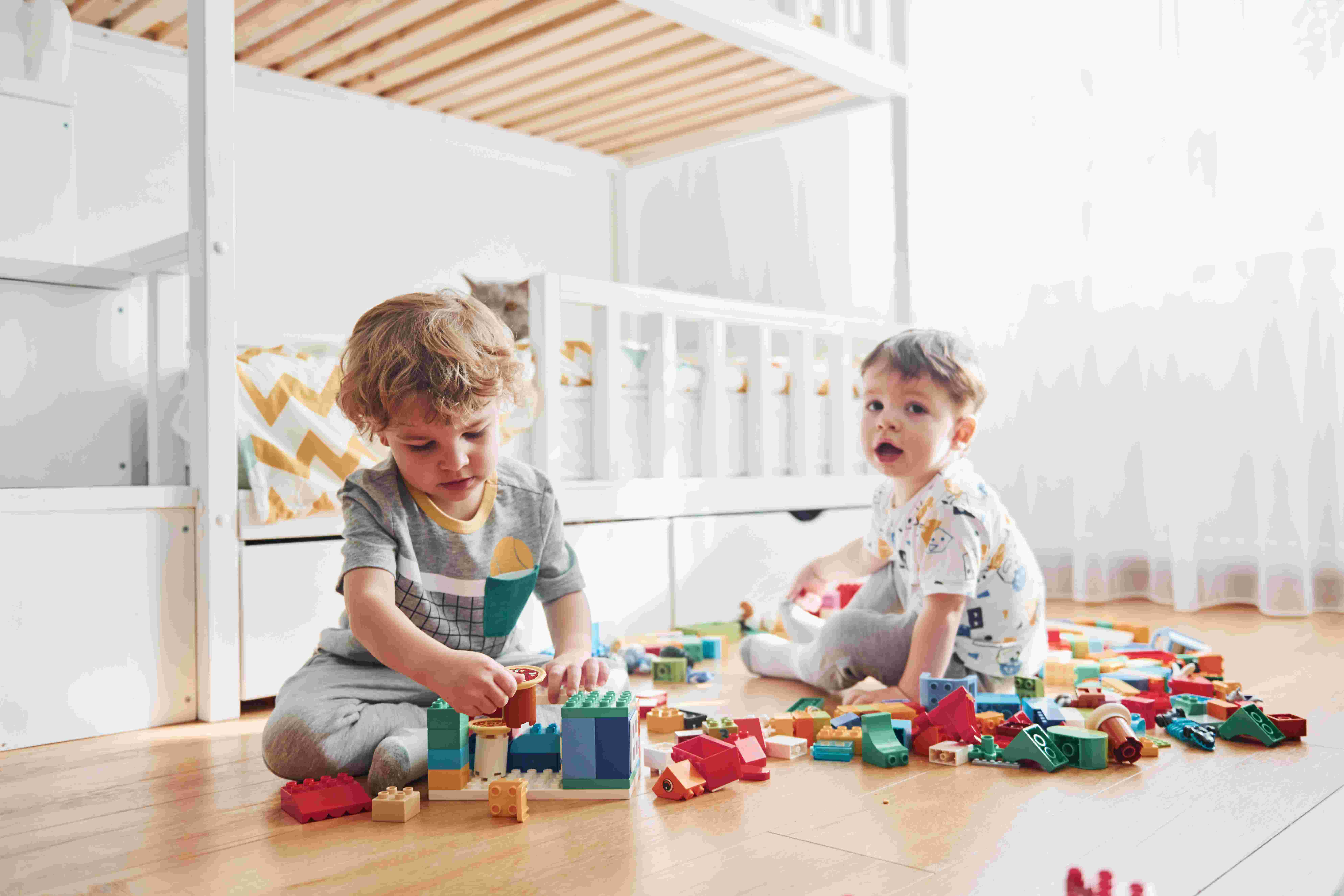
A child who is fascinated by constructing may spend time experimenting with blocks. Another may become absorbed in a sensory experience, while another develops an elaborate storyline through dramatic play.
The educator’s role is to observe these experiences as they unfold and recognize opportunities to deepen them. That requires intentionality, but it also requires flexibility. Sometimes the most meaningful learning opportunity is not the one an educator anticipated when the day began.
When an Everyday Moment Becomes Something More
Almost any experience can become a learning opportunity when an educator notices the curiosity behind it. Imagine a child looking closely at their bread during snack and noticing small air pockets inside it. Rather than simply explaining why they are there, an educator might respond, “I wonder what causes that?”
That conversation does not necessarily need to end when the snack is over. The educator could revisit the child’s interest later by offering water and whisks and inviting children to investigate what happens when they whisk quickly. As bubbles begin to form, children have an opportunity to explore air in a completely different context.
Or consider a child outside who suddenly stops after hearing a crow caw loudly. An educator might wonder alongside them: “Why do you think that crow is cawing so loud?”
Perhaps the conversation turns to birds communicating. Perhaps children wonder whether the crow has babies nearby. That interest could eventually lead to an exploration of nests, with children using natural loose parts to investigate how birds might construct them.
The goal is not to force every observation into a large project. It is to recognize that learning opportunities are everywhere and to be ready to follow a child's thinking when an experience captures their attention.
The Educator’s Role: Observe, Respond, and Wonder
Supporting curiosity begins with knowing children well. Strong relationships allow educators to recognize the individual behaviours that signal interest, uncertainty, excitement, or emerging skills. This is particularly important because children do not all communicate curiosity in the same way.
When educators understand the children in their care, they are better positioned to know when to ask a question, when to introduce another material, when to join an investigation, and when to simply allow a child more time.
Being intentional also means being able to pivot. A planned activity may reveal an unexpected interest, and educators can respond by helping children explore that new direction.
Joy matters here, too. When an educator responds to a discovery with genuine interest and enthusiasm, it communicates that the child's thinking is valuable and worth exploring.
Making Space for Quieter Curiosity
A curiosity-driven classroom should not privilege the children who are quickest to speak or most eager to join a group.
For quieter or more hesitant children, curiosity may first be nurtured through hands-on materials that invite exploration without requiring immediate conversation. An educator may sit nearby and allow the child to become comfortable with the experience before gently extending the learning.
A question such as “What do you notice about this?” can open a conversation without putting pressure on the child. “What would happen if...?” can invite experimentation, while “Can you tell me how you made that?” gives the child an opportunity to talk about something they already understand.
Some children may need additional time before participating in a larger activity. Others may feel more secure with an educator sitting beside them or when exploring alongside a trusted peer in a smaller group. The objective remains the same, to create the emotional safety children need to explore in ways that feel comfortable and authentic to them.
How Curiosity Builds Confidence and Emotional Growth
Curiosity-driven learning supports more than academic development.
When children feel safe enough to investigate an idea, they begin taking small independent steps in their learning. When an experiment works or when several attempts eventually lead to an “a-ha” moment, they experience the satisfaction of discovering something for themselves. Those experiences help build confidence.
Curiosity can also strengthen social development. Children may call a friend over to share a discovery, explain an idea to a peer, or work together to solve a problem. Through these interactions, they practice communication and learn that discoveries can be shared and expanded through collaboration.
Wonder can also encourage empathy. When children are invited to think about people, animals, and the natural world, they begin considering experiences beyond their own.
And when an answer does not come immediately, curiosity gives children a reason to persist. With the support of an educator, children learn to stay with a challenge, manage frustration, try another approach, and continue exploring.
Extending Curiosity Beyond BrightPath
The curiosity nurtured in the classroom often travels home. Families are encouraged to extend their child’s learning and share evidence of those experiences, such as photographs or artifacts with the classroom. Families have shared that their children begin asking more questions at home and noticing details that might previously have gone overlooked.
The process can influence adults, too. Families may find themselves slowing down rather than immediately completing a task for their child or providing an answer. Giving children a little more time creates space for independence, experimentation, and deeper exploration.
A walk outside, a question at the dinner table, or an interesting discovery in the backyard can all become opportunities to wonder together.
Curiosity as Preparation for Lifelong Learning
The value of curiosity extends well beyond the early years. By encouraging children to investigate rather than simply receive information, BeeCurious Curriculum helps establish habits that support future learning.
- Inquiry develops as children learn to ask questions, investigate ideas, and seek understanding.
- Independence grows when children pursue their interests and begin taking ownership of their learning.
- Problem-solving develops when children encounter challenges, consider possibilities, and persist in finding solutions.
- Critical thinking emerges as children ask why something happened, test different approaches, and recognize that a question may have more than one possible pathway.
- Communication and collaboration grow as children explain their ideas, listen to others, share discoveries, and investigate together.
- Innovation is encouraged when children experiment with possibilities and use one discovery to inspire the next.
Perhaps most importantly, curiosity helps nurture a love of learning. Children begin to recognize themselves as competent and capable as people whose questions are worth asking and whose ideas are worth exploring.
It All Starts With Wonder
Curiosity does not require an elaborate experiment or a carefully planned lesson. It can begin with the sound of a bird outside or a child wondering what will happen if they try something one more time.
The BeeCurious Curriculum at BrightPath starts with these moments because they provide an opportunity to understand what genuinely captures a child's attention. Educators can then respond with thoughtful questions, inviting environments, meaningful materials, and the time children need to investigate.
When children learn that their curiosity will be noticed and supported, they gain more than knowledge. They develop confidence to ask questions, persistence to work through challenges, independence to test their own ideas, and excitement about what they might discover next. That is why BeeCurious Curriculum starts with wonder, because one small moment of curiosity can open the door to so much more.
Stay in the know and check us out on social media! Follow BrightPath on Facebook and Instagram for a variety of fun activities and daily inspiration.